With Wimbledon 2026 set to begin later this month, attention is once again turning to the world’s oldest tennis tournament.
First held in 1877, Wimbledon remains one of the most prestigious events in sport and is known for traditions such as its grass courts, all-white dress code and royal patronage. Yet beyond the trophies and famous champions lies a collection of records, milestones and historical moments that have shaped the tournament over nearly 150 years.
View this post on Instagram
Here are 10 lesser-known facts from Wimbledon history ahead of this year’s Championships, which will be broadcast live on SPOTV NOW.
The first-round match that changed tennis forever
John Isner and Nicolas Mahut produced the longest match in professional tennis history during the first round of Wimbledon in 2010. Played across three days, the contest lasted 11 hours and five minutes before Isner eventually prevailed 6-4, 3-6, 6(7)-7, 7-6(3), 70-68. The deciding set alone lasted more than eight hours.
The match became one of the defining moments in modern tennis and played a significant role in the eventual introduction of final-set tiebreak rules across the Grand Slams.
Wimbledon’s first final-set tiebreak in 2019
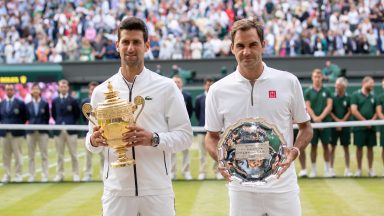
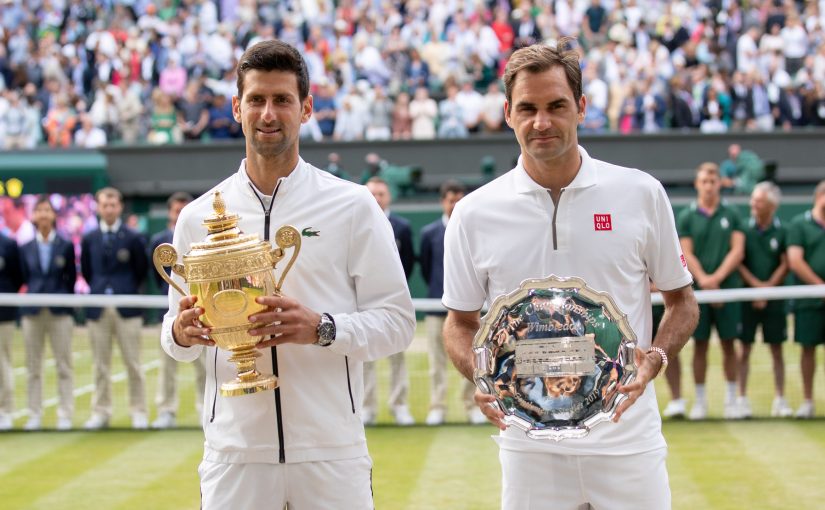
After introducing a final-set tiebreak at 12-12 in 2019, Wimbledon did not have to wait long for the new rule to be used. The first singles match to require the tiebreak was the men’s final between Novak Djokovic and Roger Federer. Djokovic saved two championship points before winning 7–6(5), 1–6, 7–6(4), 4–6, 13–12(3) in four hours and 57 minutes. The contest remains the longest Wimbledon singles final on record.
Won more points but lost the final
The 2019 men’s singles final also produced an unusual statistical anomaly. Although Djokovic won, Federer actually won more points across the match, finishing with 218 points compared to the Serbian’s 204. It remains one of the rare occasions in a Grand Slam final where the runner-up finished with more total points than the champion.
Only two women won Wimbledon in both the Amateur and Open eras
The Open Era began in 1968 when professional players were allowed to compete alongside amateurs at Grand Slam tournaments. Only Billie Jean King and Margaret Court managed to win Wimbledon singles titles both before and after the transition, placing them in a unique category in the tournament’s history.
Britain’s wait for a women’s singles champion stretches nearly half a century
Virginia Wade remains the last British woman to win the Wimbledon singles title. She defeated Betty Stöve in the 1977 final during Queen Elizabeth II’s Silver Jubilee year, with the monarch watching from Centre Court. Nearly five decades later, no British woman has repeated the achievement despite several deep runs from home players.
The wild card who won the whole thing
Goran Ivanišević arrived at Wimbledon in 2001 ranked No. 125 in the world and entered the tournament via a wild card. The Croatian, who had previously lost three Wimbledon finals, defeated Carlos Moya, Andy Roddick, Marat Safin, Tim Henman and Patrick Rafter en route to his sole Grand Slam title. He remains the only wild-card player to win a Wimbledon singles championship.
Only two men won Wimbledon without dropping a set in the Open Era
While several women’s singles players have won Wimbledon without dropping a set, it has only happened twice in men’s singles during the Open Era. Only Björn Borg (1976) and Roger Federer (2017) have completed their title runs with a perfect set record.
132 years without a roof
For most of Wimbledon’s history, play remained entirely dependent on the weather. Famous matches including Ivanišević’s 2001 title triumph and the classic 2008 Federer-Nadal final were disrupted by rain delays. A retractable roof was finally installed above Centre Court in 2009, allowing play to continue regardless of conditions and reducing the risk of lengthy weather-related interruptions.
When Wimbledon was cancelled
Wimbledon has only been interrupted during three periods in its history: World War I (1915-1918), World War II (1940-1945) and the COVID-19 pandemic in 2020. The most recent cancellation marked the first interruption to the tournament in 75 years.
Double-bagel finals in both Amateur and Open eras
A 6-0, 6-0 scoreline in a singles final is extremely uncommon, even more so in a Grand Slam. It has happened only three times in major history, and Wimbledon is the only Grand Slam to have produced double-bagel champions in both the Amateur and Open eras. The All England Club first witnessed the feat in 1911 when Dorothea Lambert Chambers defeated Dora Boothby, before Iga Świątek repeated it 114 years later with her victory over Amanda Anisimova.