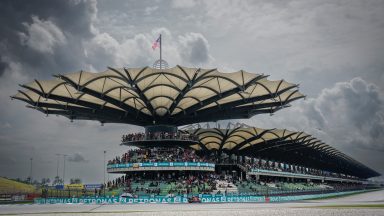
F1, MotoGP share record six circuits in 2026 after Sepang return
By Lee Seng Foo11 hours ago
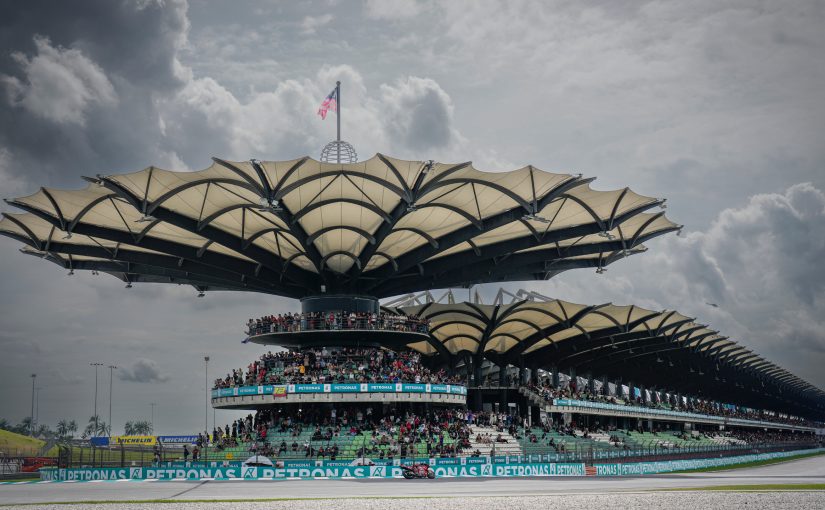
(Diego Sperani/MotoGP)
Formula One and MotoGP will share a record six circuits in a single season in 2026 after the return of Malaysia’s Sepang International Circuit to the F1 calendar as the replacement venue for the Bahrain Grand Prix.
F1 announced on Sunday that Sepang will host the Bahrain Grand Prix on October 4 amid conflict in the Middle East, bringing the former Malaysian Grand Prix venue back to the championship for the first time since 2017.
The addition means F1 and MotoGP will both race at Sepang, Spain’s Circuit de Barcelona-Catalunya, Britain’s Silverstone, Austria’s Red Bull Ring, the Circuit of the Americas in Austin and Qatar’s Lusail International Circuit, marking the highest number of shared venues in a single season.
The previous record was five shared circuits, last achieved in 2017 when Sepang was still on the F1 calendar alongside Barcelona, Silverstone, the Red Bull Ring and COTA.
However, that total could yet fall back to five if both Qatar Grands Prix do not go ahead because of the ongoing conflict in West Asia — Lusail is currently scheduled to host MotoGP on November 8 before staging F1 three weeks later.
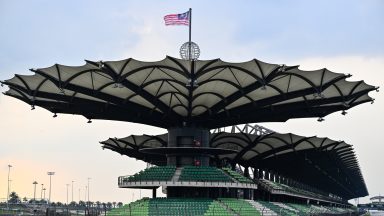
Sepang hosted F1 from 1999 to 2017 and has remained a permanent fixture on the MotoGP calendar since 1999, making it one of only a handful of circuits to enjoy long-term homes in both world championships.
The Malaysian circuit’s annual calendar also includes the Asian Le Mans Series, GT World Challenge Asia, TCR Asia Tour, the Asian Road Racing Championship and the Moto4 Asia Cup, underlining its status as one of the world’s busiest and most versatile permanent motorsport venues.
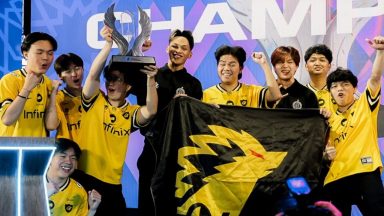
Southeast Asia's top Mobile Legends: Bang Bang (MLBB) teams will be present at the Games of the Future in Astana, Kazakhstan, with Indonesian powerhouse ONIC and Malaysia's Selangor Red Giants (SRG) leading the region's challenge in the MOBA Mobile tournament.
The 2026 edition, which runs from July 29 to August 9, combine ‘phygital’ sports with standalone esports competitions.
While the event's flagship disciplines blend physical and digital competition into a single contest, titles such as MLBB, Dota 2 and PUBG: Battlegrounds form one of its other main attractions.
The MLBB tournament, scheduled from August 4 to 9, features 16 invited teams competing for a prize pool of US$900,000.
Southeast Asia accounts for six of those teams, with ONIC and SRG joined by Indonesia's Bigetron by Vitality, Malaysia's Team Vamos, Cambodia's PRO Esports and the Philippines' Team Falcons.
ONIC return as the defending champions after defeating Aurora Gaming in last year's final in Abu Dhabi, while SRG arrive as one of Malaysia's leading organisations following a string of strong international performances in recent seasons.
Elsewhere, the PUBG: Battlegrounds competition features six Southeast Asian-based teams and Dota 2 has two.
Selected matches and events from the 2026 Games of the Future will be shown live on SPOTV NOW.
Athletes will compete across both virtual and physical arenas when the Games of the Future returns this week, with 'phygital' sports once again taking centre stage in the international event that blends video gaming with traditional athletic competition.
After its debut in Kazan in 2024 and the second edition in Abu Dhabi last year, the multi-sport event heads to Astana, Kazakhstan, from July 29 to August 9, bringing together more than 800 athletes from over 50 countries to compete for a prize pool of more than US$4 million.
Unlike conventional multi-sport events, the Games of the Future revolves around 'phygital' disciplines, where results are determined by performances in both digital and physical contests.
Teams first face off in a video game before continuing the contest in its real-world equivalent, with scores from both stages combined to decide the winner.
This year's 'phygital' programme features football, basketball, shooting, fighting and dancing, while the event's esports competitions include titles such as Dota 2, PUBG: Battlegrounds and Mobile Legends: Bang Bang.
Selected events will be shown live on SPOTV NOW.
The 2026 Bahrain Grand Prix is set to take place nearly 6,000 kilometres away from its namesake country, with Malaysia's Sepang International Circuit poised to stage the Formula 1 race on October 4.
The unusual arrangement comes after the original race in Bahrain was affected amid conflict in the Middle East, paving the way for Malaysia to return to the calendar for the first time since 2017.
The addition caps a busy period for Sepang, which will host the Asia Road Racing Championship penultimate round in September and welcome MotoGP for the Malaysian Grand Prix later in October.
Interestingly, it would not be the first F1 Grand Prix to be staged outside the country whose name it carried. Here are three other examples from the championship's history.
Swiss Grand Prix in France
Switzerland had been a regular fixture on the F1 World Championship calendar at the Bremgarten Circuit until the country banned circuit racing following the 1955 Le Mans disaster, in which more than 80 spectators and Mercedes driver Pierre Levegh were killed.
Two decades later, the Swiss Automobile Club revived the event at France's Dijon-Prenois circuit, just across the border, with backing from Swiss sponsors. The race was held as a non-championship event in 1975, with home favourite Clay Regazzoni taking victory.
The Swiss Grand Prix returned to the F1 World Championship in 1982 after the Argentine Grand Prix was cancelled. Keke Rosberg claimed his maiden F1 victory on his way to winning that year's world championship, with the race remaining the last Swiss Grand Prix to date.
San Marino Grand Prix in Italy
Despite its name, the San Marino Grand Prix was held entirely at Italy's Imola circuit because the tiny republic had no venue capable of hosting an F1 race. Introduced in 1981, it allowed Italy to stage two championship races alongside the Italian Grand Prix at Monza.
Imola became one of F1's most iconic venues, with Michael Schumacher, Ayrton Senna and Alain Prost among its most successful winners. The Grand Prix is also remembered for the tragic 1994 weekend that claimed the lives of Roland Ratzenberger and Senna, prompting sweeping safety reforms across the sport.
F1 left Imola after the 2006 season before returning from 2020 to 2025 as the Emilia-Romagna Grand Prix, keeping one of the sport's most historic circuits on the calendar under a different name.
Luxembourg Grand Prix in Germany
Between 1949 and 1952, Luxembourg hosted races under its own name at Findel Airport, with winners including Ferrari stars Luigi Villoresi and Alberto Ascari, although none counted towards the F1 World Championship.
After a 45-year absence, the Luxembourg Grand Prix name returned in 1997 and 1998 at Germany's Nürburgring because Hockenheim already hosted the German Grand Prix while Jerez held the rights to the European Grand Prix. Jacques Villeneuve and Mika Häkkinen won the two editions on their way to their respective world championship titles.
The Luxembourg Grand Prix disappeared after just two editions when the European Grand Prix title became available following Jerez's departure from the calendar. The Nürburgring then hosted the European Grand Prix until 2007, bringing the Luxembourg Grand Prix to an end once again.
Ahead of the second half of the 2026 MotoGP season, Ai Ogura has firmly established himself as one of the championship's leading riders.
With a maiden victory at the Dutch Grand Prix and three more podium finishes, the Trackhouse rider sits second in the standings, trailing championship leader Jorge Martin by 14 points while holding a four-point advantage over defending champion Marc Marquez.
Still only in his second MotoGP season, the Japanese rider's success did not happen overnight. It represents the pinnacle of a development pathway that began more than a decade ago in a one-make junior series designed to uncover Asia's next generation of talent: the Moto4 Asia Cup, then known as the Asia Talent Cup.
While Ogura made his debut a year earlier, it was the championship's third season in 2016 that assembled what is now regarded arguably as its strongest-ever class. Contested over six rounds in Thailand, Qatar, Japan and Malaysia, Thailand's Somkiat Chantra claimed the title after edging Ogura and Indonesia's Andi Farid Izdihar in a closely fought championship battle that went down to the Sepang finale, while Indonesia's Gerry Salim and Japan's Yuki Kunii also celebrated victories during the season.
Looking back with the benefit of hindsight, that grid produced far more than future MotoGP riders. It gave rise to a generation that today forms the backbone of Asian motorcycle racing across Grand Prix, WorldSBK and the Asia Road Racing Championship (ARRC).
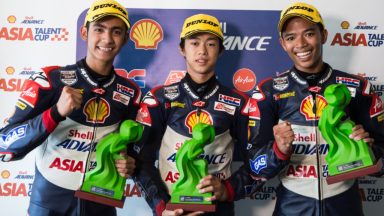
More importantly, the class of 2016's success cemented the Moto4 Asia Cup's reputation as a genuine stepping stone to world championship racing, paving the way for graduates such as Hakim Danish, Azroy Anuar, Veda Pratama and Mario Aji.
The latest intake returns to action at the Sepang International Circuit from July 31 to August 2 for the second round of the 2026 season, with riders including Hayato Chishiki, Qabil Irfan and Bintang Pranata hoping to follow the pathway forged by Ogura and his contemporaries.
Whether any of them can match the achievements of the class of 2016 will only be known years from now. For the moment, that remarkable generation remains the benchmark for what the Moto4 Asia Cup can produce.
While Ogura now leads the way in MotoGP, here is where some of the other standout riders from that landmark 2016 class are today.
Somkiat Chantra
The 2016 champion became the first graduate from that class to reach MotoGP, making history as Thailand's first premier-class rider after progressing through Moto2, where he claimed two race victories. Although his MotoGP stint was brief, Chantra remains part of Honda's factory programme in 2026, competing in WorldSBK and representing the manufacturer at the Suzuka 8 Hours.
Andi Farid Izdihar
After finishing third in 2016, Andi Farid progressed through the European and Grand Prix ranks before returning to Asia, where he has established himself as one of Indonesia's leading superbike riders. The 28-year-old now races for JDT Racing Team in the ARRC's ASB1000 class alongside defending champion Hafizh Syahrin.
While several of his 2016 peers moved between championships, Ryusei Yamanaka has built one of the longest Grand Prix careers, competing in Moto3 continuously since 2019. With more than 120 Grands Prix to his name, the Japanese rider has become one of the category's most experienced competitors, proving that longevity at world championship level is an achievement in itself.
Can Öncü's name is forever etched into Grand Prix history after winning the 2018 Valencian Community Grand Prix on his Moto3 debut, becoming the youngest Grand Prix winner at the age of 15 years and 115 days. Rather than remaining on the MotoGP ladder, the Turkish rider later switched to the Supersport World Championship, where he is contesting his seventh season in 2026.
Deniz Öncü
After finishing 10th in 2016, Deniz Öncü returned to win the Moto4 Asia Cup title a year later before graduating to Moto3 and Moto2. He made history in 2025 by becoming the first Turkish rider to win a Moto2 race with victory at the Aragon Grand Prix, further underlining the depth of talent that emerged from the class of 2016.