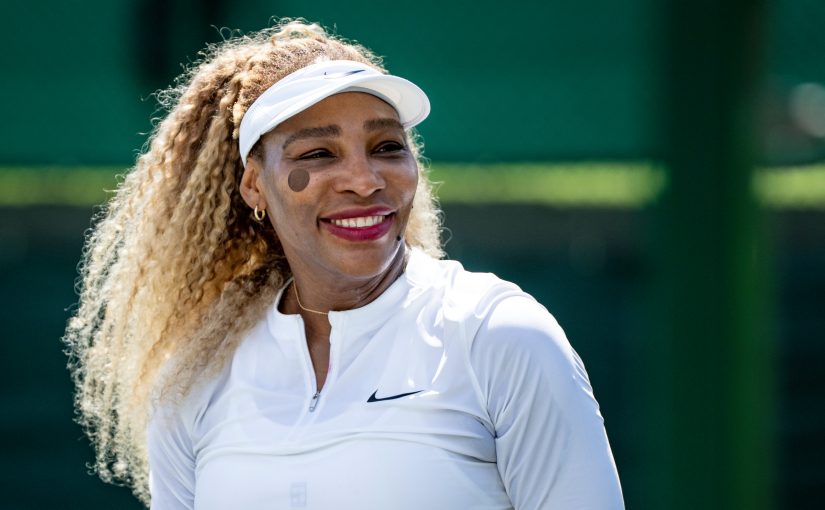
Serena Williams’ return to Wimbledon singles competition in 2026 has added another chapter to the tournament’s long history of high-profile wild cards.
The 23-time Grand Slam singles champion has accepted a singles invitation from the All England Club after already confirming her participation in the doubles draw alongside sister Venus.
View this post on Instagram
While wild cards often generate debate, Wimbledon has frequently used them to accommodate former champions, returning stars and players whose achievements or circumstances outweigh their rankings.
Over the years, several of those decisions have produced some of the tournament’s most memorable moments.
Goran Ivanisevic (2001)
No Wimbledon wild card had a greater impact than Ivanisevic’s invitation in 2001. The Croatian arrived at the All England Club ranked 125th after injuries had derailed his season and prevented him from entering the tournament directly.
A three-time Wimbledon runner-up, Ivanisevic was granted a place in the draw based on his previous achievements on grass. He responded by producing one of the most unlikely title runs in Grand Slam history and becoming the only player to win a Grand Slam singles title as a wild card.
Juan Carlos Ferrero (2009)
Ferrero received a Wimbledon wildcard in 2009 after his ranking dropped outside the world’s top 90 during an extended slump. Although primarily known for his success on clay, the former world No. 1 produced one of the strongest men’s wildcard campaigns since Ivanisevic’s triumph eight years earlier.
Ferrero defeated Gilles Simon and Fernando Gonzalez on his way to the quarter-finals before losing to Andy Murray, a run that helped revive his career and contributed to his return to the world’s top 20.
View this post on Instagram
Zheng Jie (2008)
Zheng Jie produced one of the most remarkable runs by a Wimbledon wildcard in the Open Era. The Chinese player defeated top seed Ana Ivanovic in the third round and advanced to the semi-finals before eventually losing to Serena Williams.
Her run made her the first women’s singles wildcard to reach the Wimbledon semi-finals and the first Chinese player to advance that far at a Grand Slam singles tournament.
Pat Cash (1986)
Cash received a Wimbledon wild card in 1986 after injuries and an emergency appendectomy severely disrupted his season and caused his ranking to fall outside the direct entry positions. The Australian justified the invitation by defeating second seed Mats Wilander en route to the quarter-finals, where he lost to Henri Leconte.
The run helped restore his confidence after months of injury problems and proved to be a turning point in his comeback. The following year, Cash returned to the All England Club as a seeded player and captured the Wimbledon title.
Emma Raducanu, Naomi Osaka, Caroline Wozniacki and Angelique Kerber (2024)
Wimbledon’s 2024 women’s wild cards were widely regarded as one of the tournament’s strongest collective decisions. All four players were Grand Slam champions, but their rankings had fallen because of extended absences rather than declining ability. Raducanu returned after multiple surgeries, Osaka and Kerber resumed competition following maternity leave, and Wozniacki continued her comeback after returning from retirement.
Among all the singles wild cards awarded that year, Raducanu produced the best run by reaching the fourth round.